PaleoLab

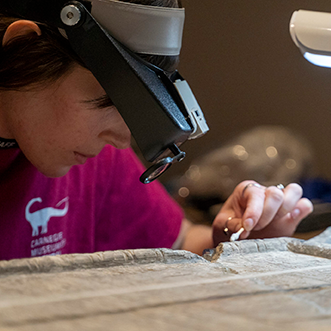
Preparator Amy Henrici
measures a specimen
|
Interview
with Preparator Amy Henrici
Q. What
is a preparator?
A. A
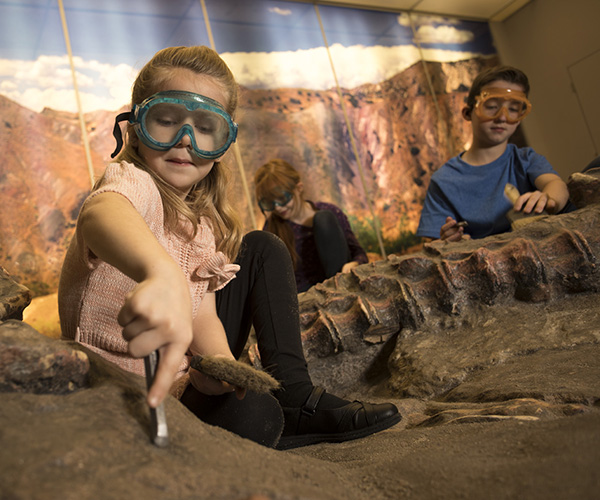
preparator (pre-PARE-uh-tor) uncovers fossils from the rock that
surrounds them. The surrounding rock is called matrix.
Preparators also repair fossils that have been damaged, make replicas
(casts) of original fossils, and use a microscope to find and remove small fossils from crumbled matrix or sand.
Q. It
all looks the same! How can you tell the fossils from the rock?
A. It's
not always easy, but, to a trained eye, fossils do look different
than the surrounding matrix. Some fossils look shiny, while some
are a different color or a different texture than the matrix.
Q. How
long does it take to dig out the fossils?
A. If
the fossils are small—like Coelophysis teeth—it can
take a couple of days just to work away an area the size of a
deck of cards! Even if the fossils are larger—like a Diplodocus leg bone—it can still take a few days to work away an area
the size of a box of cereal. The hardness of the matrix can also
affect the preparation time. It sometimes takes years to uncover
one large animal or a group of smaller animals.
Q. How do you get the fossils to the museum?
A. In
the field, fossils and the surrounding rock are enclosed in a
"jacket" made of plaster and burlap. This helps keep them intact
during removal and transport from the dig site. This is the same method
that was used more than 100 years ago on Diplodocus carnegii. Crates are carefully built around plaster-jacketed fossils—the
combination of fossil, matrix, and crate can weigh thousands of
pounds! Back at the lab, preparators open the plaster jacket and
set to work exposing the fossil for scientific study or exhibition.
Q. What kind of tools do you use?
A. Hammers,
chisels, miniature jackhammers, and an electric saw are among
the tools initially used to chip away plaster and rock. Once the
fossil has been exposed, we use dental tools, hardened steel pins,
and tiny brushes for more delicate work.
Q. What
happens when a fossil breaks?
A. Fossils
are extremely fragile. We use special glue designed just for them.
Q. How do you know how to reassemble the animal?
A. Preparators
use their knowledge of animal anatomy as a blueprint when working
on a fossil. There are always clues in the bones—like evidence
of muscle attachment—that help determine the posture of
an animal. Other fossil clues may include teeth or skin imprints.
If another specimen of the same animal is available, we can compare
the bones and put them together based on that skeleton's information.
Q. How
long does it take to become a preparator?
A. The
basic techniques can be learned quickly, but it takes plenty of
practice to become skilled. The most important quality is patience!
Anatomy and paleontology can be studied in college, but preparation
can only be learned on the job. A new preparator will start on
low-quality fossils that have already been rejected from our scientific collections. Once scientists are confident
in the quality of the preparator's work, he or she can progress
to more delicate fossil material. Some of the best preparators
have worked for 30 to 40 years.
Click here to return to PaleoLab home |