
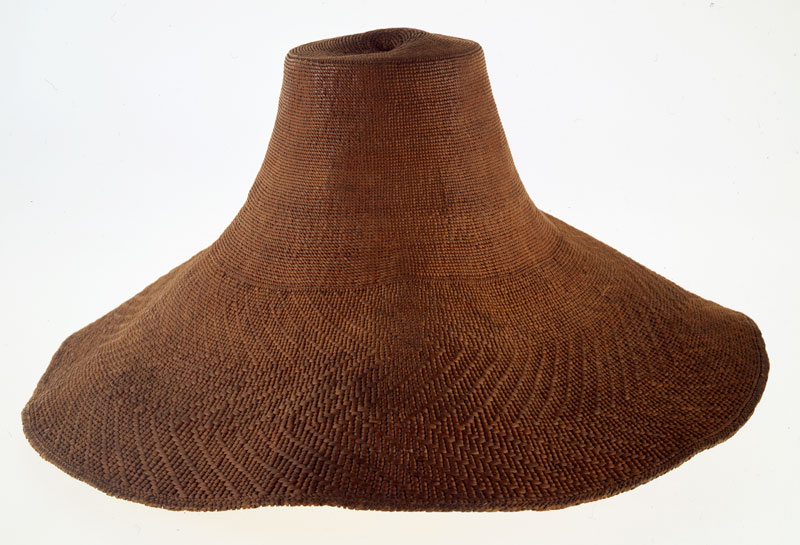
Tlingit peoples, Alaska, collected 1904
Sitka spruce (Picea sitchensis) root, cedar?; H 22.0 x D 44.0 cm; 3178-123a
Conifers cover over 50 percent of southeast Alaska. Western hemlock and Sitka spruce are the most abundant. The Sitka spruce, Alaska's state tree, grows to 225 feet in height and to 8 feet in diameter, and it can live to be 700 years old. Tlingit women devised a technique for weaving containers and hats from the roots of the Sitka spruce tree. Both women and men wore this type of common work hat, particularly for canoe travel.
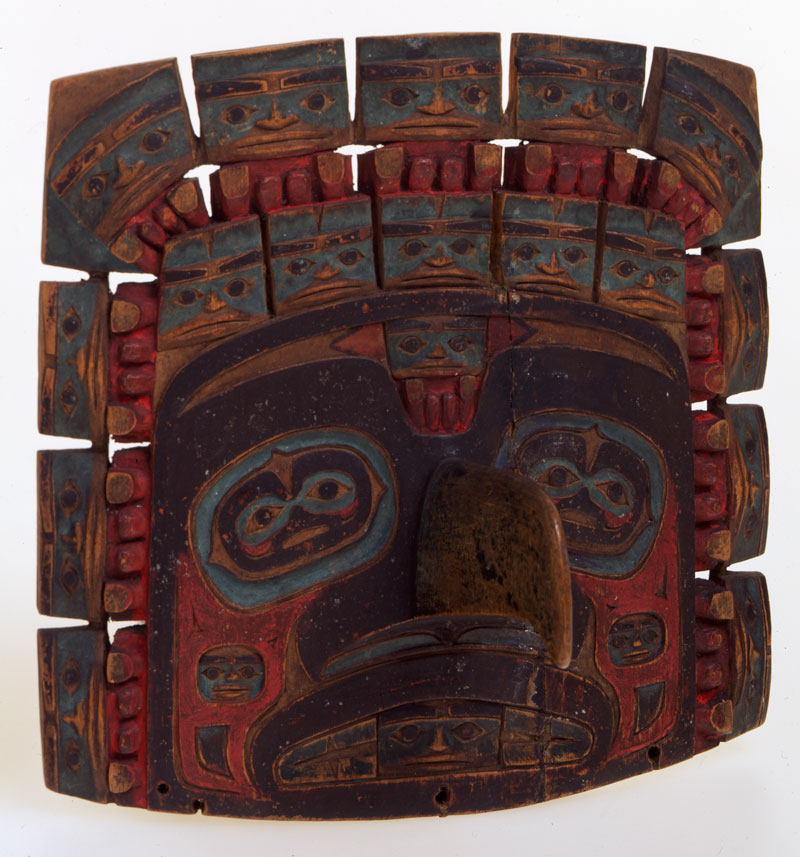
Tsimshian peoples, southern Alaska and British Colombia, Canada, collected 1904
Maple? (Acer sp.), mineral paints; L 9.8 x W 16.6 x H 16.2 cm; 3178-33
This type of frontlet is worn as a headdress, usually with a trailer of ermine skins. As a dancer shakes his head from side to side during the dance, white bird down floats out from the crown of sea lion whiskers, missing from the top of this frontlet.
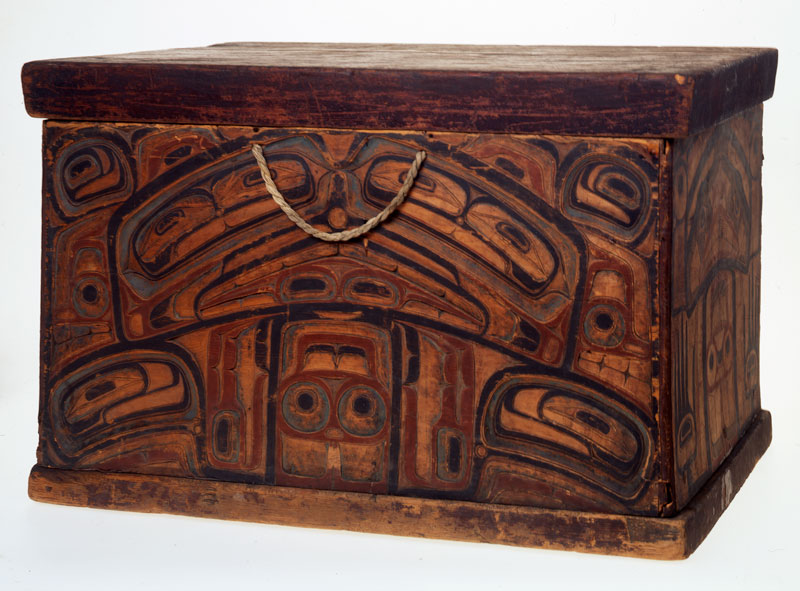
Haida peoples, British Colombia, Canada, mid 1800s
Yellow cedar? (Chamaecyparis nootkatensis), Western red cedar? (Thuja plicata), mineral paints, commercial cotton, iron, steel; L 48.5 x W 75.0 x H 41.5 cm; 3178-109 a & b
Ornately carved chests like this one held the family heirlooms and ceremonial regalia. On special occasions, the house-master sat on a chest; upon his death, it sometimes became his coffin.
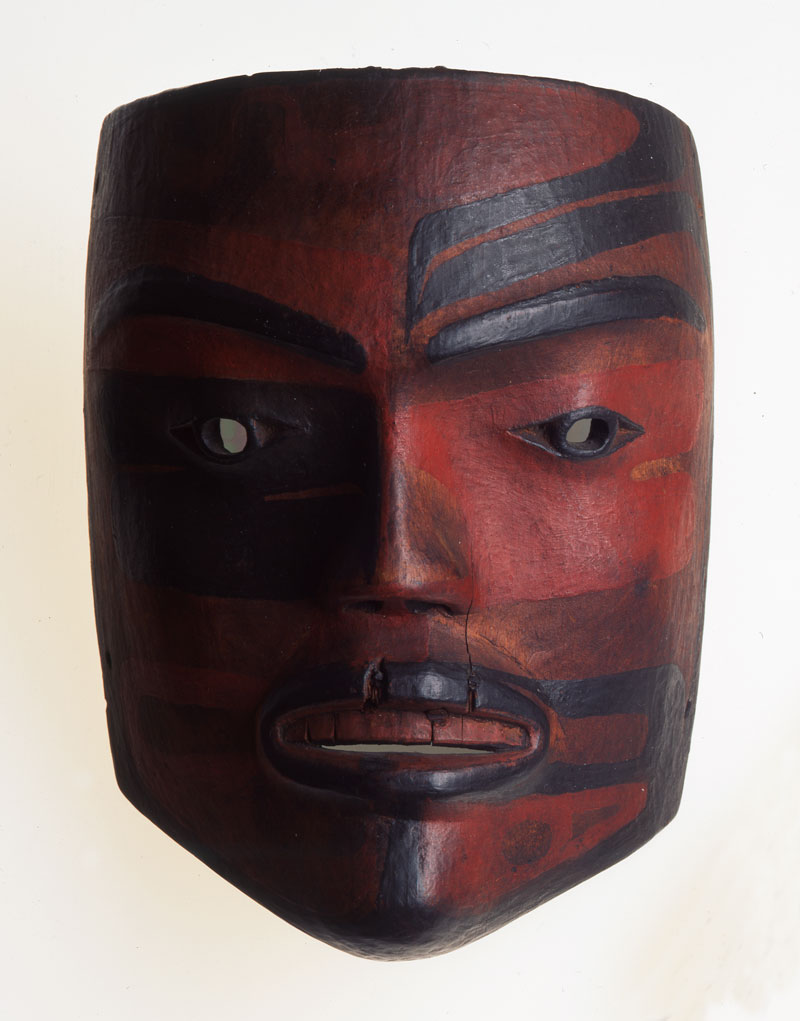
Nuuchahnulth or Kwakwaka'wakw (Kwakiutl) peoples, Kyoquot Sound or Quatsino Sound, early 1800s
Unidentified wood, mineral paints, iron; L 22.0 x W 16.0 x H 8.5; 3178-36
With a crooked knife, a woodworker could carve curved surfaces and the finest details on masks, rattles, boxes, and other decorative items. This dance mask shows the tool marks of a specialist skilled in carving wood.