|
|
Powdermill Nature Reserve
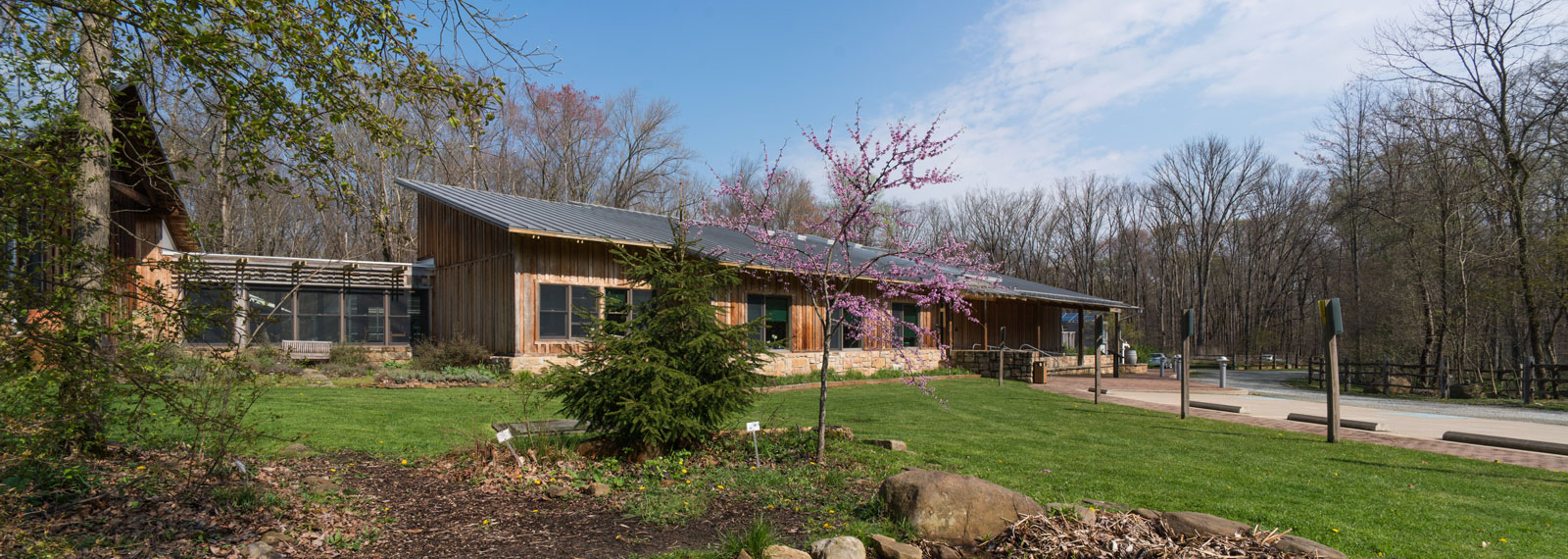
Powdermill Nature Reserve, the environmental research center
of Carnegie
Museum of Natural History, has been dedicated
to its mission of research, education, and conservation
for over 50 years. It is a place
for scientists, for students, and for families who are
interested in the natural world. The Powdermill bird migration research program is home to the one of the longest continually
running bird
banding stations in the United States. A wide variety
of public education programs serve children and adults. Researchers from around the
world conduct diverse long- and short-term scientific
studies in herpetology, botany,
invertebrate zoology, and ornithology.
Get Hooked on Your Local Nature Reserve
May 12, 2012
8 a.m.–4:30 p.m.
Free; no registration required
Visit Powdermill Nature Reserve for a fun-filled day of free nature activities and demonstrations for all ages. The event is led by scientists and educators from Carnegie Museum of Natural History and Powdermill Nature Reserve.
- Visit the bird banding and bioacoustics labs where birds and their migration patterns are studied.
- Go out in the field with researchers and experience turtle trapping and fish surveying, and learn more about these important scientific studies.
- Take a naturalist-led hike on the trails or discover the plants, animals, and insects of Appalachia at your own pace in the family exploration area.
Powdermill’s Get Hooked on Your Local Nature Reserve is being held in conjunction with Trout Unlimited’s Laurel Highlands Trout Trail Festival. Free shuttles between Powdermill and the Ligonier Valley YMCA will be running throughout the day. Get Hooked on Your Local Nature Reserve is presented by the museum’s Center for Biodiversity and Ecosystems.
Adopt A Bird Band
The Adopt-A-Bird-Band program invites nature lovers of all ages to become personally involved in supporting the vital biodiversity and conservation research at the core of Carnegie Museum of Natural History's mission. Adoptions make great gifts for bird lovers, budding naturalists, and conservation enthusiasts, or anyone who wants to celebrate the arrival of spring in a unique and special way. Take the Laurel Foundation Challenge: The Laurel Foundation will match your donation dollar-for-dollar up to $20,000! Click here to explore the adoption website!
About Powdermill
Powdermill
was established in 1956 to serve as a field station of Carnegie
Museum of Natural History for long-term studies of natural
populations—their life histories, behaviors, and ecological
relationships.
Powdermill
Nature Reserve is both a place and a philosophy. It stands
as a symbol of the human vision—both scientist and philanthropist
alike. The museum's need for a natural area which could be
used as a laboratory and preserved for the study of natural
processes was understood and outlined in 1948 by Dr. M. Graham
Netting, then Assistant Director of Carnegie Museum of Natural
History. Since he believed the Ligonier Valley to be the finest
natural area in western Pennsylvania, he personally instituted
a search for a suitable site for his vision.
In
1956, General and Mrs. Richard K. Mellon and Dr. and
Mrs.
Alan M. Scaife presented to Carnegie Institute, for the use
of the Natural History Museum, eleven tracts of land totaling
1,160 acres, beginning about three miles south of Rector.
The area was named "Powdermill Nature Reserve, a Research
Station of Carnegie Museum." Over the next several years,
additional acreage was added to the Reserve through
other
generous gifts, and today, Powdermill Nature Reserve offers
over 2,200 acres of woodlands, streams, open fields,
ponds,
and thickets.
The
reserve is used by scientists to monitor and study changes
in the local ecology and wildlife populations. It has served
as a refuge for many plants and animals which, as a result of habitat distruction, are now becoming increasingly rare in our region
as their habitats are destroyed. Powdermill Run, the mountain
spring stream that traverses the mixed deciduous forest property,
was found to be one of the very few unpolluted streams available
for ongoing studies of aquatic life.
Today,
as the Reserve celebrates its fifty-year anniversary, it is
far more beautiful than when it was established, due to the
natural growth of protected vegetation and the efforts of
many supporters. |